
Can Machines Learn? Understanding Machine Learning with a Real-Life Traffic Signal Example
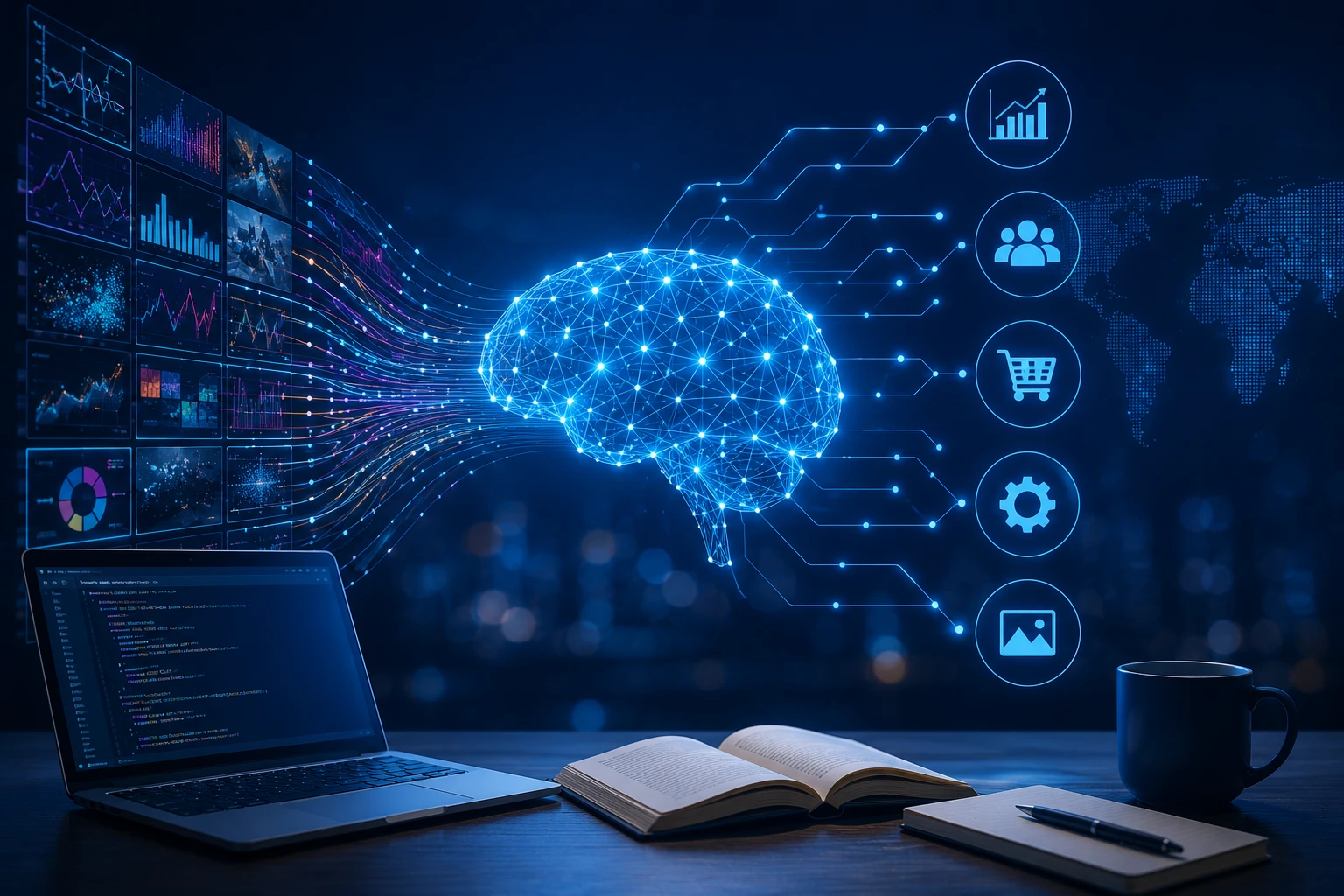
Can Machines Learn?
If someone had asked this question a few decades ago, the answer would have been “No.”
Back then, computers could only perform tasks by following a strict set of instructions written by human programmers.
Here is a simple example that most of us have experienced.
Have you ever waited at a traffic signal late at night when the crossroad was completely empty?
I remember waiting at a traffic signal at 1:00 a.m for nearly 60 seconds, staring at an empty road.
Do you know why?
It’s because of the traditional timer-based traffic signals that many of us grew up with. They used fixed timers and followed a pre-programmed schedule.
- Green for 60 seconds
- Yellow for 5 seconds
- Red for 60 seconds
The computer did not know it was 1:00 a.m. It did not know the road was empty. It simply counted time and changed the lights. It repeated this cycle all day, every day, regardless of the actual traffic conditions.
Today, things are different.
In many cities, traffic signals can adapt to real-time traffic conditions.
Thanks to Machine Learning, a branch of Artificial Intelligence.
Machine Learning enables computers to learn from past data and experience instead of relying entirely on explicitly programmed instructions.
In simple terms, instead of a human writing step-by-step rules for every possible situation, the computer studies examples, learns patterns, and uses those patterns to make predictions.
How Machine learning changed Traffic Signals:
The computer that once counted time can now monitor and understand real-time traffic conditions using:
- Cameras with image-processing capabilities
- Radar and infrared sensors
- Vehicle detection systems
Instead of following predefined rules, the traffic management system is tasked to manage the traffic .
Traffic management system goes through these important Machine Learning steps.
Step 1: Studying Examples
The system collects traffic data over time, such as:
- The number of vehicles passing through an intersection
- Peak and off-peak traffic hours
- Vehicle waiting times
- Busier roads
- Traffic changes during weekends, holidays, and special events
Step 2: Finding Patterns
By analyzing this data, the system discovers patterns, like:
- Traffic is usually heavy between 8:00 a.m. and 9:00 a.m.
- Traffic is lighter late at night
- Rain often causes slower traffic movement
- Traffic increases near shopping malls and schools in the evenings
Step 3: Making Predictions
With the current traffic conditions and the patterns it has learned, the system predicts what is likely to happen next:
- Traffic on the main road may increase in the next few minutes
- Fewer vehicles are expected late at night
- Congestion is likely near the school when classes end
Step 4: Taking Action
Based on these predictions, the system adjusts the traffic lights dynamically, reducing waiting times for drivers:
- longer green lights for busier roads
- Shorten signal cycles during quiet hours
- Change lights more quickly when no traffic is detected
Learning from Experience
The most interesting part is that the system learns from the decisions it makes, just like a traffic police officer.
If a decision improved traffic flow, the system treats it as a good decision.
If a decision caused delays, the system notes it and avoids making the same mistake in similar situations.
Before and After Machine Learning
Before Machine Learning, computers performed tasks by following a strict set of instructions written by human programmers. They were fast and reliable, but they could not learn, adapt, or make decisions when real-world conditions changed.
Machine Learning changed this by enabling systems to learn from data, recognize patterns, make predictions, and improve their performance over time. Without a programmer having to anticipate every possible situation in advance.
Common Uses of Machine Learning
Today, Machine Learning applications generally fall into four broad categories.
1. Making Predictions
Machine learning analyzes historical data and identifies trends to make predictions.
Examples include predicting traffic congestion, weather conditions, product demand, equipment failures, and customer behavior.
2. Finding Hidden Patterns
Machine Learning discovers meaningful patterns and relationships within large datasets that may not be obvious to humans.
Examples include identifying customer purchasing habits, detecting fraud patterns, discovering disease trends, and analyzing market behavior.
3. Automated Decision Making
Machine Learning can automatically make decisions based on predefined goals and learned patterns.
Examples include supporting loan approval decisions, filtering spam emails, optimizing traffic signals, and recommending products to customers.
4. Content Generation
Machine Learning can create new content by learning from existing text, images, audio, and videos.
Examples include generating articles, creating images, drafting emails, producing summaries, and assisting with software code generation.
Data….Data….Data..
Everything in Machine Learning begins with Data.
It is the foundation of Machine Learning.
A Machine Learning model does not understand concepts on its own. Instead, it learns patterns by analyzing the examples provided in the training data.
The quality of its predictions depends heavily on:
- Quality of the data
- Quantity of the data
- Accuracy of the data
If the training data contains useful, accurate and relevant information, the model is more likely to make reliable predictions.
However, if the data is incomplete, inaccurate, or biased, the model may produce poor results.
This is why data preparation is often the most important and time-consuming part of any Machine Learning project.
Conclusion: Machine Learning is about:
“learning from experience to make better decisions without being explicitly programmed for every situation.”
As Machine Learning continues to evolve and become part of our daily lives, two important questions come to mind.
Question 1
If machines can learn from data, make predictions, discover patterns, generate content, and make decisions, what will they be able to achieve in the future?
Question 2
As machine learning becomes more capable of making decisions that affect human lives, who should decide what it is allowed to do, and who should be responsible when it gets things wrong?